From the Oceanside Arts Magazine
 Sylvie Peltier
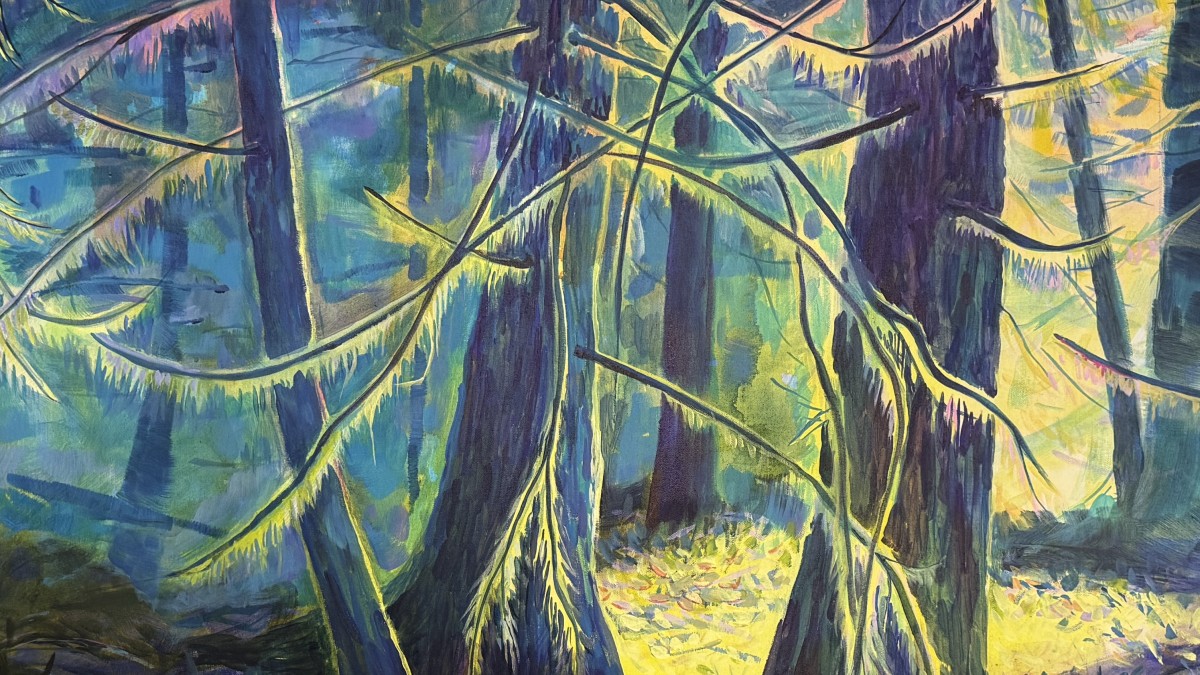
I was interviewed for the June 2026 issue of the Oceanside Arts Magazine where I discussed my creative process, influences and artistic journey.
Reproduced from the Oceanside Arts Magazine.
SYLVIE PELTIER
Artists in Their Own Words
“Award-winning filmmaker turned full-time painter, Sylvie Peltier creates vibrant acrylic works from her ocean-view studio on Vancouver Island.”

Sylvie Peltier has been painting with acrylics for over a decade. An Exhibiting Member of the Federation of Canadian Artists since 2021, she has participated in several group and solo shows.
An award-winning documentary producer and director, Sylvie spent years creating compelling television films before transitioning to her current focus. She now paints and teaches full-time from her ocean-view studio.
Since moving to Qualicum Beach in 2023, her work has been shown at the Old School House Arts Centre, the MAC Arts Centre, the Comox International Airport, and the Art Gallery of Greater Victoria.
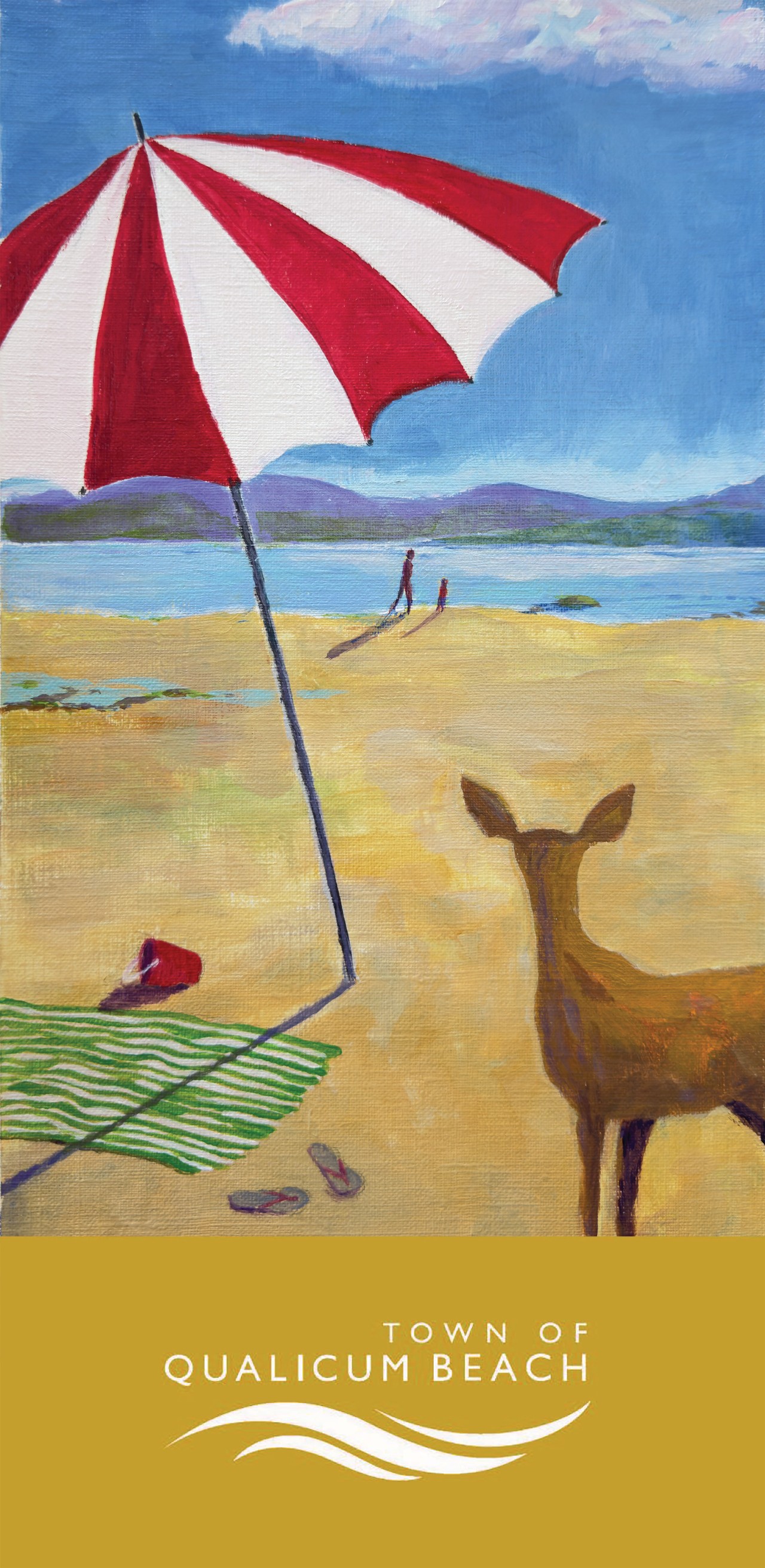
Sylvie also has the pleasure of having her work represented on one of the Town of Qualicum Beach street banners.
In the following interview, Sylvie Peltier discusses her creative process, influences, and artistic journey.
Can you tell us a little about your creative background and how painting
became such an important part of your life?
I’ve always wanted to be an artist. In my youth I entered and won several art competitions, but I was encouraged by my parents to pursue a more stable and lucrative career. After degrees in Agricultural Economics and Environmental Economics I decided to pursue documentary filmmaking. It provided me with a creative outlet, but painting was my calling and about 12 years ago I endeavoured to have an artistic practice. I began by doing daily drawings on my iPad, which I did for almost 400 days in a row.
You came to painting after careers in other fields, including documentary film production. How have those earlier experiences influenced the way you
approach art today?
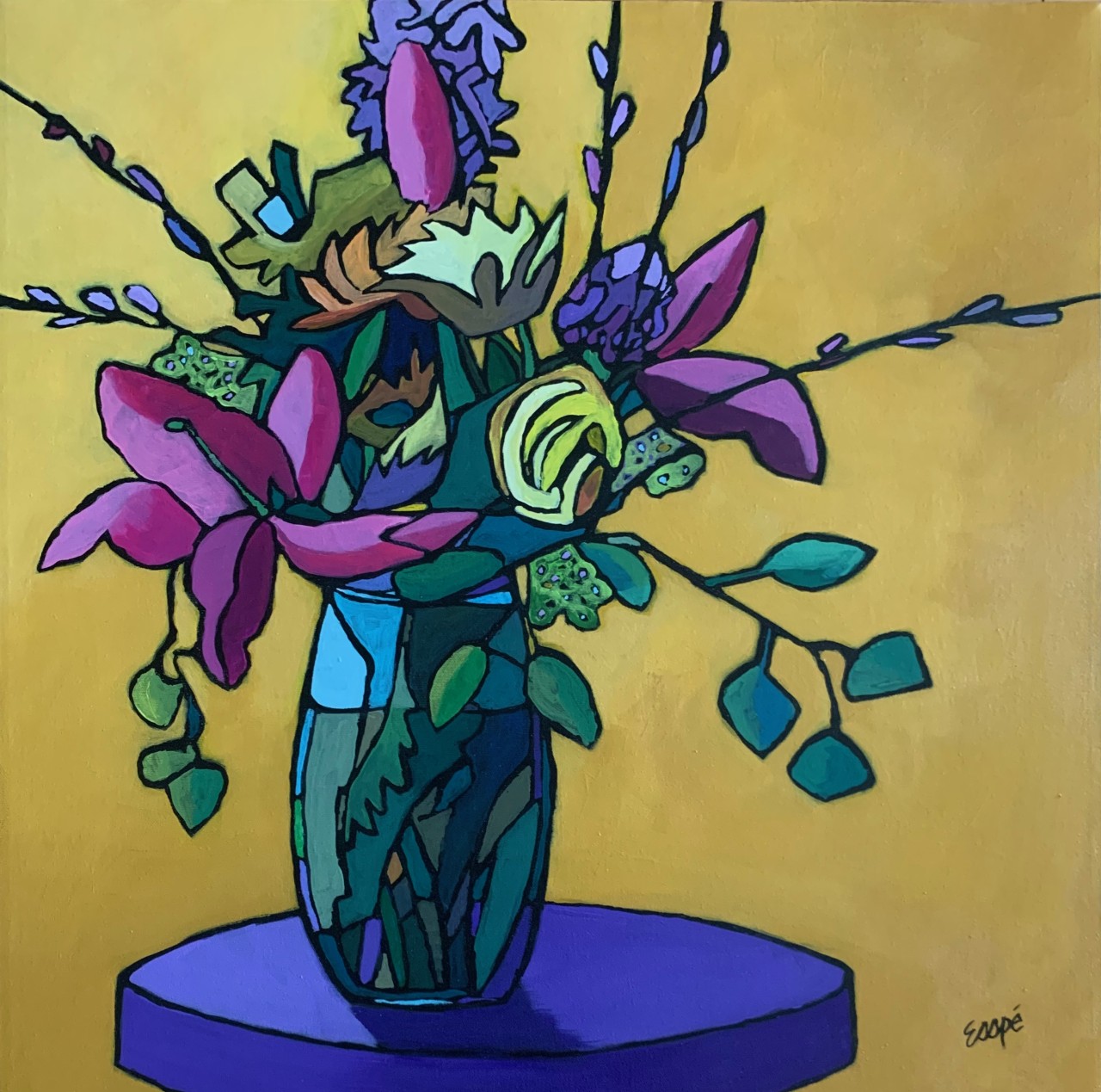
Interestingly, rather than pushing me toward documentary-style work, those experiences led me in the opposite direction. Process and technique have become more important to me than creating art with an explicit message. I think, in part, it’s a reaction to the work I did before, and to the constant negativity we’re exposed to every day. More than anything, I want my work to bring a sense of joy.
Your work often feels joyful, playful, and experimental. What draws you toward that approach?
It’s important for me to enjoy the painting process and this means that I need to be able to try new things and make “mistakes.” But I also like a challenge. I play a lot of word games and painting to me is also a kind of puzzle that I must resolve. The resolution I seek is to create something that is beautiful, intriguing and surprising.

You’ve written about the importance of composition and design in painting. What makes a composition “work” for you?
Design and composition are the gateway to beauty and harmony. A painting works when it invites you to linger. And composition and design are how the painter takes the viewer on her journey. You should be able to grasp the image immediately but then discover new things as you spend time with it. Ideally, the viewer begins to wonder “How did she do that?” and that sense of curiosity opens the door to wonder, excitement and a deeper connection with the painting.
Your recent exhibition asks the question, “What Would Hockney Do?” What was it about David Hockney’s work and attitude toward art that inspired you so deeply? (The Old School House Arts Centre)
When I came up with the idea for the exhibition, I wanted to talk about inspiration and how we find it as artists. There is always this push-pull between inspiration and copyright, and I wanted to invent a conversation with an influential painter for this exhibition and explore the many ways that
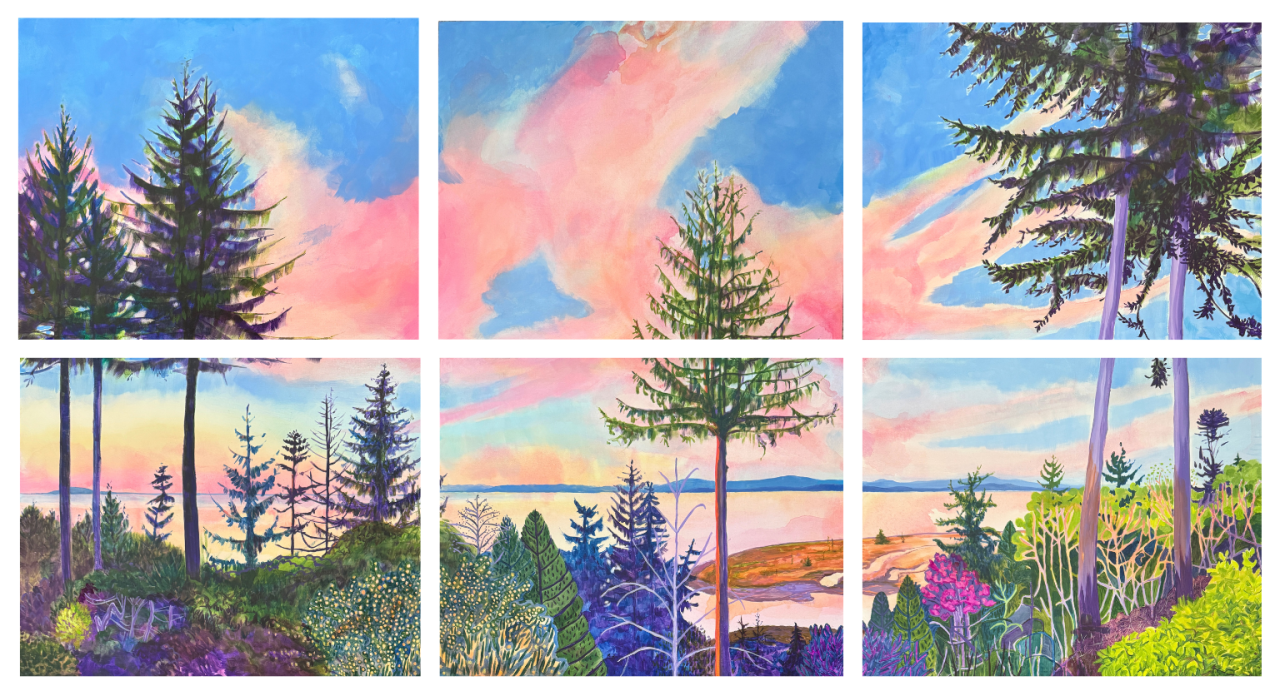
we can find inspiration without slavishly copying someone else’s work. I chose Hockney because he is unabashedly himself and I have long admired his bright and playful work. Once you know that I love Hockney’s work I think you can see his influence in my art.
You seem very open to exploring and mixing styles rather than staying within one fixed approach. Why is experimentation important to you?
I strongly believe that experimentation is essential to both art and life. When you stop being open to new ideas and approaches, you risk becoming rigid and stagnant. When I see artists who have been painting the same way for decades I feel a sense of dread. I can’t help imagining that going into the studio would begin to feel like a job, in the worst possible sense: repetitive, predictable, and devoid of discovery.
What does a typical day in the studio look like for you?
I don’t have a typical day. I usually work on one painting at a time, so I am either looking at my work and wondering where to go next or looking at a blank canvas and wondering where my inspiration will come from. Because I spend a lot of time just thinking about my work, I’ve come to accept that I paint in spurts.
Do your paintings usually begin with a clear plan, or do they evolve as you work?
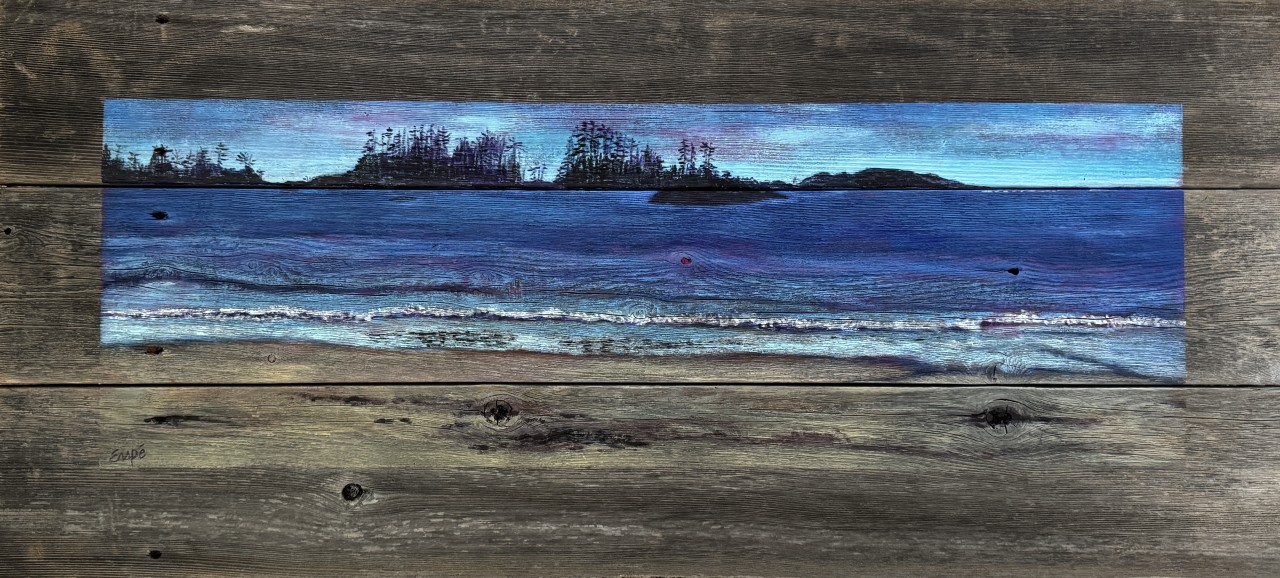
It’s a bit of both. For example, I will plan to do a painting from one of my photographs on an abstract background, but then the background I painted will create some unexpected challenges that I will have to overcome. I recently started painting on weathered cedar boards. Just like an abstract background, no two planks have the same grain and imperfections. So, I must figure out how I want to play with the cedar in my paintings.
Is there a particular painting or series that feels especially meaningful or memorable to you? What makes it stand out?
I think my water lily paintings have become a bit of my trademark. I was attracted to this theme because I spent hours on my kayak pondering about the mysteries that lied in the water below. People may be surprised by that, but the attraction was not so much the water lilies, as the water they float on which acts as both window and mirror depending on the light.

What role does Vancouver Island and the surrounding landscape play in your work?
Vancouver Island and the BC landscape have a very important place in my work. I am so grateful to be living here, and I want to share not just the beauty of the place, but the feeling of joy it brings me to be here.
What has surprised you most about your own artistic journey over the last several years?
I never really thought that I would teach painting and that I would enjoy it as much as I do. But most surprisingly for me, I believe it is making me a better painter. In the process of supporting aspiring painters, I find I must apply my own lessons about self-compassion, experimentation, and letting go to move forward.
Are there themes, ideas, or techniques you are currently exploring that excite you?
I am currently working on a series of paintings on weathered cedar boards. In the past, I never spent much time thinking about the substrate I painted on. I thought about its shape and size and then about the paint I would put on it. But now, form meets content. The cedar is a character in the paintings. It adds texture, direction and meaning to the work and it enriches the process for
me. I’ve completed 6 paintings so far and I have ideas for many more which will likely be part of my solo show at the McMillan Arts Centre in October 2027.
What advice would you give to someone returning to art later in life or beginning a creative practice for the first time?
I think the most important advice is that you need to be compassionate towards your work and realize that painting is a craft that requires practice in order to be able to put on canvas the ideas that you have. When you begin, it’s best if you don’t look at every piece you create as a defining work.

To view the article as it appeared in the Oceanside Arts Magazine, please click HERE.